Unique Things to Do in Fes

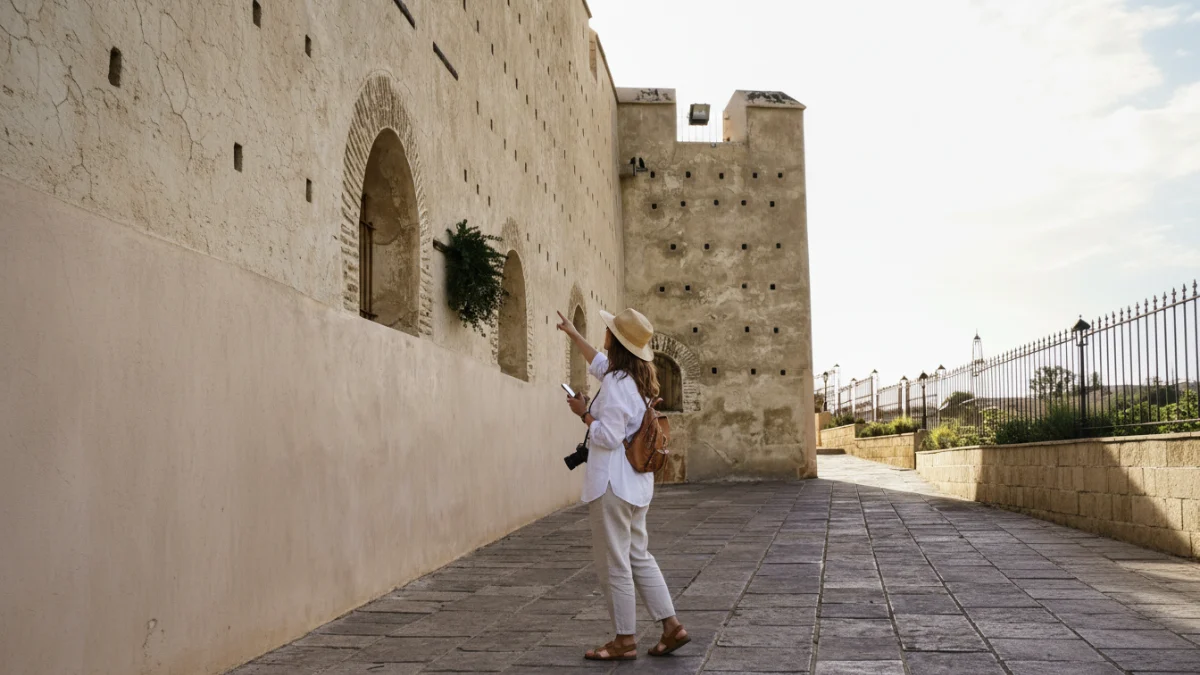
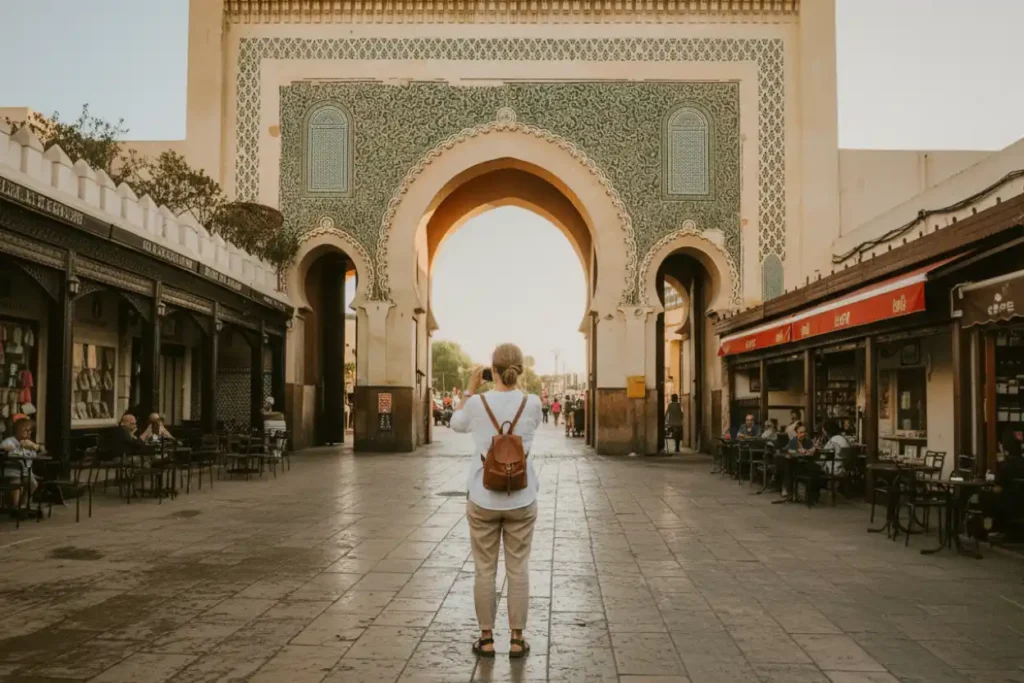
The first time I stepped through Bab Bou Jeloud—those massive blue-tiled gates everyone photographs—I made the rookie mistake of thinking I’d just “explore for an hour.” Seven hours later, I emerged from the medina with blistered feet, a brass lantern I didn’t need, and the distinct feeling that Fes had swallowed me whole. That’s the thing about discovering unique things to do in Fes: this city doesn’t do casual tourism. It demands surrender.
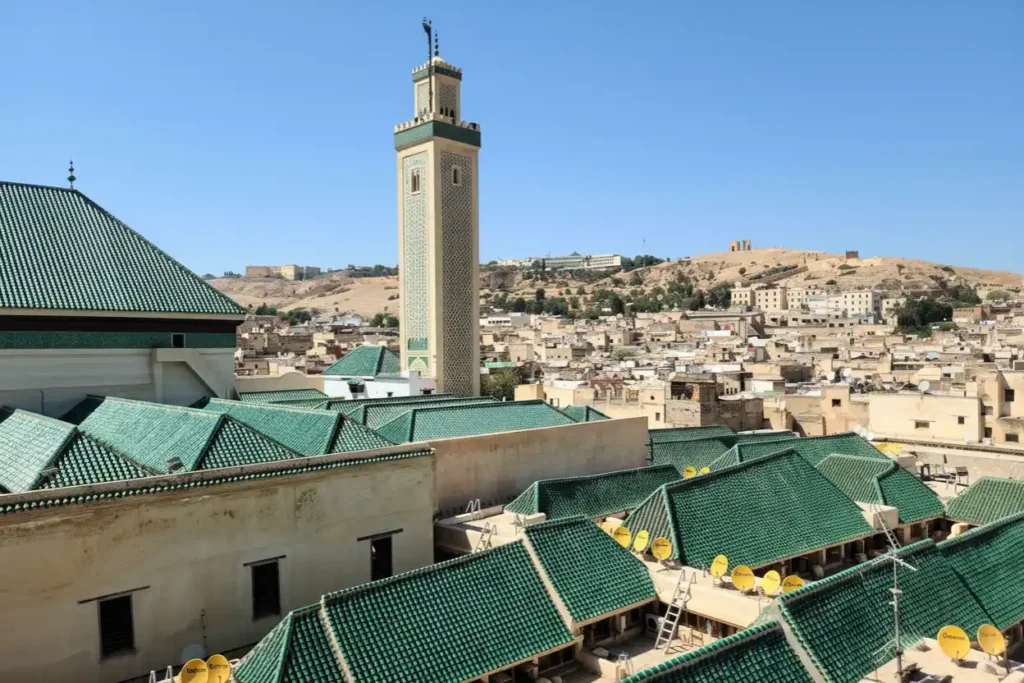
While Marrakech gets the Instagram fame and Chefchaouen attracts the blue-obsessed crowds, Fes sits quietly in the northeast of Morocco, guarding its secrets like an elderly grandmother who’s seen too much to be impressed by anything. Founded in the 9th century, it remains the country’s spiritual and intellectual heart—home to the world’s oldest continuously operating university, leather tanneries that predate European colonization, and a medina so labyrinthine that GPS becomes a cruel joke.
I’ve returned to Fes four times now. Each visit peels back another layer, revealing experiences that tourist brochures miss entirely. So forget the generic lists—here’s what actually makes this ancient city unforgettable.
Get Genuinely Lost in the Fes el-Bali Medina
Everyone tells you to hire a guide for the Fes medina. They’re not wrong—the UNESCO-listed Fes el-Bali contains over 9,000 alleyways, and your phone’s map will confidently lead you into dead ends, private homes, and once, memorably, a donkey stable. But here’s my counterintuitive advice: get lost on purpose first.
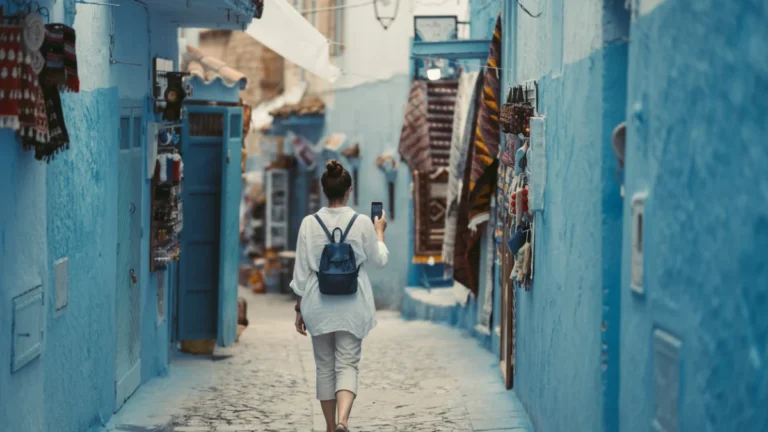
Dedicate one morning to wandering without destination. The magic of Fes el-Bali reveals itself in the unplanned moments—the woodworker carving intricate patterns into a cedar chest, the schoolchildren chanting Quranic verses from a hidden medersa, the elderly woman who wordlessly hands you a glass of mint tea because you looked thirsty. These encounters happen when you’re not trying to find something specific.
A practical tip: keep Bab Bou Jeloud or Bab Rcif as your mental anchors. When you’re thoroughly confused, any shopkeeper can point you toward “Bab”—the gates. And honestly, even when you think you’re lost, you’re probably only ten minutes from somewhere familiar. The medina is smaller than it feels.
Witness the Chaos of the Chouara Tannery
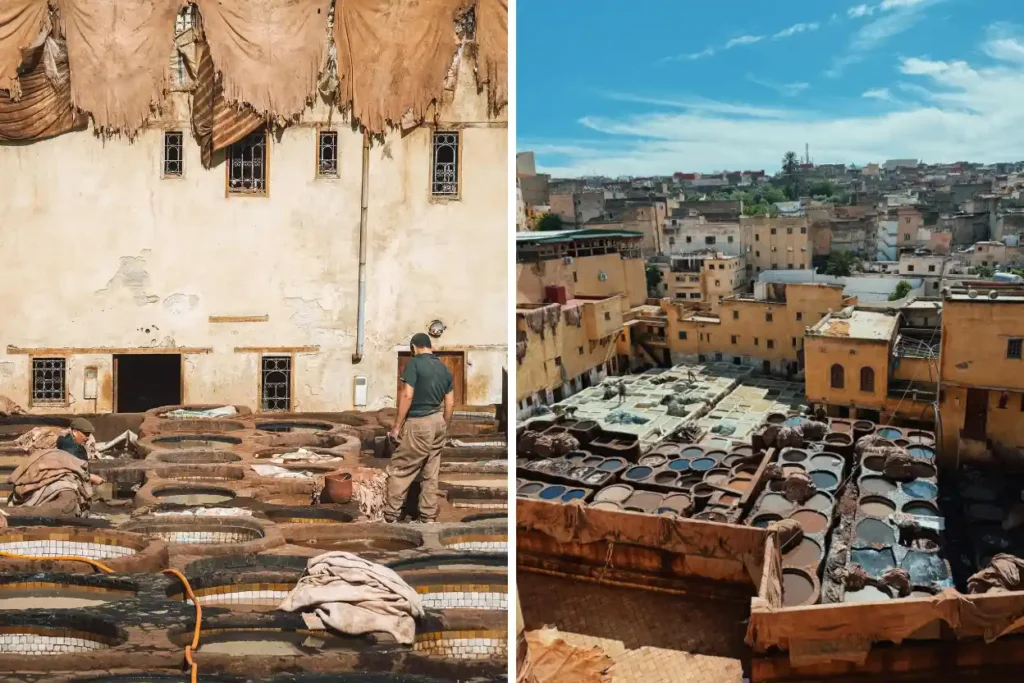
You’ll smell it before you see it. The Chouara Tannery has been operating since the 11th century using methods largely unchanged since medieval times. Workers still dye leather by hand in those famous honeycomb vats, using pigeon droppings to soften hides and natural pigments—saffron for yellow, poppy for red, mint for green—to create colors.
Here’s what nobody mentions: the terrace viewpoints are technically inside leather shops, and yes, you’ll face sales pressure. But don’t let that deter you. Go early morning (before 9 AM) when workers are actively loading hides, and the light hits the vats just right. Ask to see the terrace—shop owners expect you to look—and accept the sprig of mint they offer. You’ll need it.
If you want to buy leather, the tannery shops are actually reasonable since there’s no middleman. I picked up a beautifully soft messenger bag for 450 dirhams (about $45) after some friendly negotiation. Just remember: if it smells intensely of chemicals, it’s lower quality leather processed with modern shortcuts.
Take a Traditional Moroccan Cooking Class
I’ve done cooking classes in at least a dozen countries, but the one I took at Palais Amani in Fes remains unmatched. Not because the facility was fancy—though it was—but because our instructor, a home cook named Fatima, treated the kitchen like a confessional.
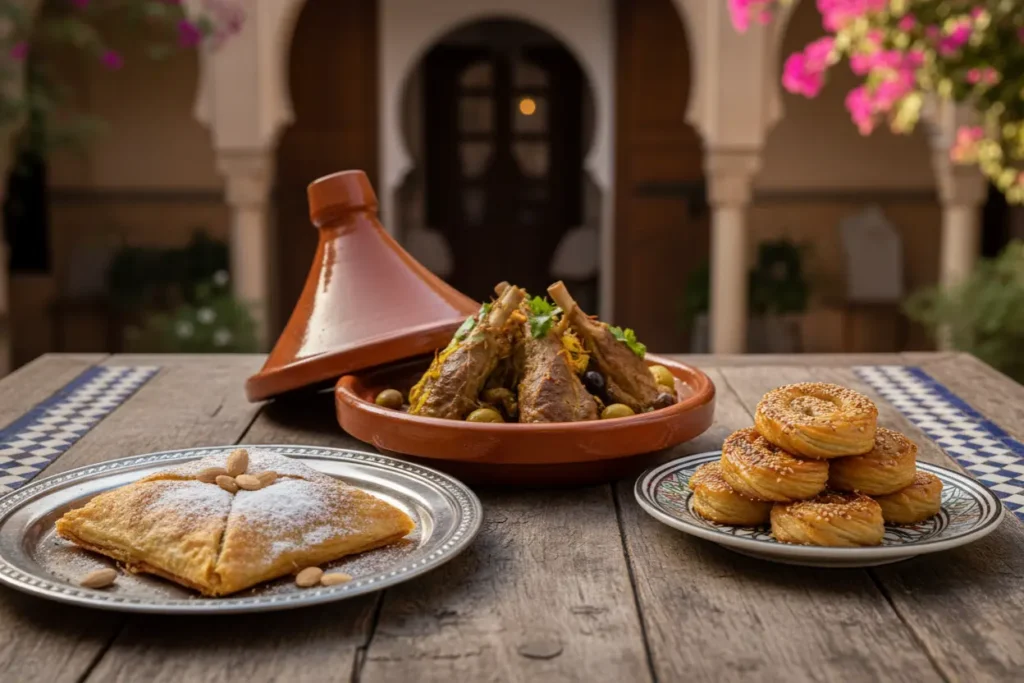
We started in the medina markets, learning to select vegetables by smell rather than appearance. Fatima explained that good Moroccan cooking depends entirely on knowing your vendors—her family has bought saffron from the same merchant for three generations. Back in the kitchen, we made lamb tagine with preserved lemons, bastilla (that impossibly delicate pigeon pie), and m’hanncha, the coiled almond pastry I’d been obsessed with since my first visit.
Several riads offer similar experiences. Riad Fes, Dar Roumana, and the community-run Cafe Clock all run classes ranging from 300 to 800 dirhams. The Cafe Clock version focuses specifically on traditional Fassi cuisine—dishes unique to Fes that you won’t find elsewhere in Morocco.
Explore the Bou Inania Medersa at Golden Hour
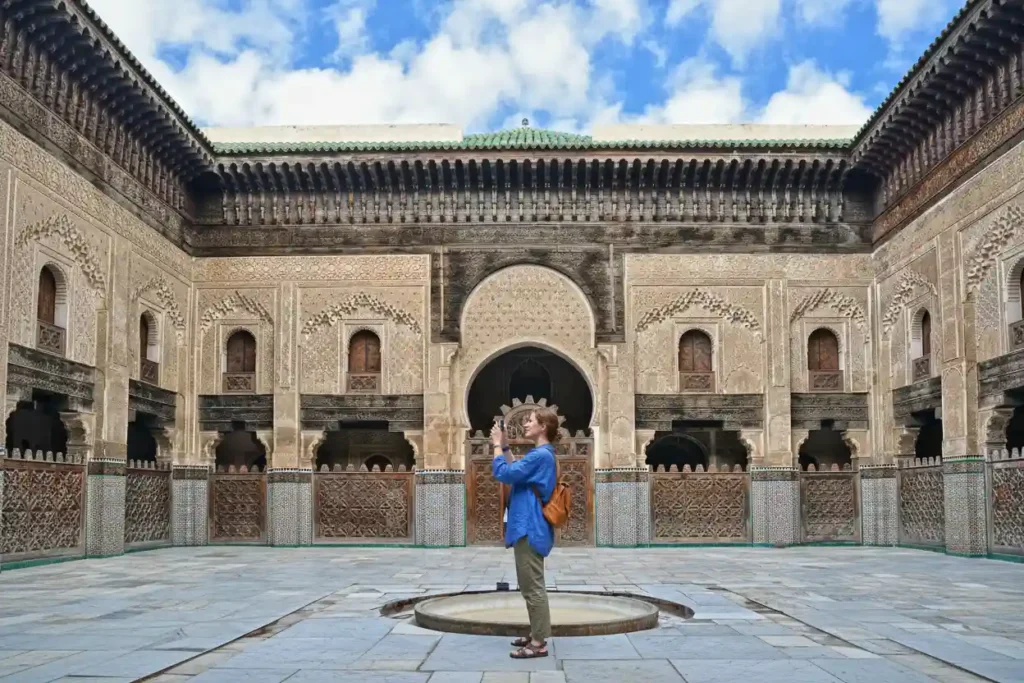
Morocco has no shortage of historic Islamic schools, but the Bou Inania Medersa stopped me cold. Built in the 1350s, it’s considered the finest example of Marinid architecture—every surface covered in intricate zellij tilework, carved cedar, and stucco arabesques so detailed they look like lace frozen in plaster.
Most visitors rush through between major attractions. Instead, go around 4 PM when afternoon light streams through the central courtyard. Sit on the marble edge of the ablution fountain and just absorb the geometry. The artisans who created this worked with simple tools and no computers, yet achieved mathematical perfection that modern architects study.
Entry costs 20 dirhams. Skip the audio guide—the building speaks for itself. And look up: the carved wooden ceiling tells its own story if you’re patient enough to decode the patterns.
Hunt for Treasures in the Souk Ain Allou
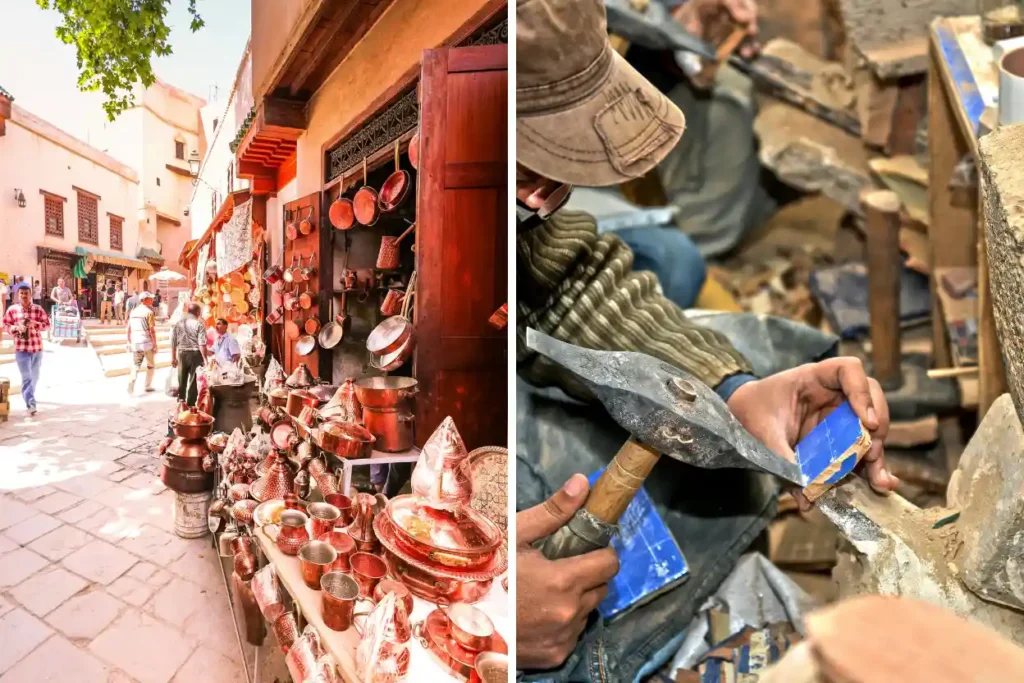
Forget the tourist-trap shops lining the main medina arteries. For genuine Moroccan handicrafts, navigate to Souk Ain Allou, the artisan quarter where craftspeople actually work. You’ll find brass workers hammering intricate patterns into lanterns, weavers producing traditional Fassi brocade, and ceramic painters decorating the blue-and-white pottery Fes is famous for.
I spent an afternoon watching a third-generation zellige maker cut geometric tiles by hand—a skill that takes seven years to master. He wasn’t performing for tourists; I was just the random foreigner who’d wandered into his workshop looking confused. That’s the beauty of this neighborhood: it exists for locals, and you’re simply privileged to observe.
Prices here run 30-50% lower than the main shopping areas because you’re buying directly from makers. A hand-hammered brass tray that costs 600 dirhams near Bab Bou Jeloud? Probably 350 dirhams here, with room to negotiate.
Experience the Jewish Heritage of the Mellah
Fes was once home to one of Morocco’s largest Jewish communities, and the Mellah—the old Jewish quarter—preserves that history in ways that often surprise visitors. The Ibn Danan Synagogue, restored in the 1990s, remains one of the most beautiful in North Africa, with ornate wooden galleries and a subterranean ritual bath.
More moving is the Jewish Cemetery, sprawled across a hillside with thousands of whitewashed tombs. It’s peaceful, contemplative, and largely empty of visitors. A guardian will unlock the gates and offer to guide you—tip him 50 dirhams for his knowledge and care of the space.
The Mellah’s architecture differs noticeably from the rest of the medina: houses here have exterior-facing balconies (unusual in traditional Moroccan design) and windows open to the street. Walking through feels like stepping into a parallel version of Fes, shaped by a different community’s needs and customs.
Soak in a Traditional Hammam
Spa hammams in riads are lovely, but they’re also sanitized versions of a deeply communal Moroccan tradition. For the real experience, find a neighborhood hammam—Hammam Sidi Aziz and Hammam Mernissi are both accessible to visitors—and prepare for culture shock.
You’ll strip down (women keep underwear on, men go nude), move through progressively hotter rooms, and eventually submit to a vigorous scrubbing by an attendant wielding a kessa glove. The amount of dead skin that comes off your body will horrify you. You’ll emerge feeling reborn.
Neighborhood hammams cost around 15-30 dirhams entry, plus 50-100 dirhams for the scrub. Bring your own toiletries, or buy black soap and ghassoul clay at the entrance. Go during off-peak hours (late morning or early afternoon) when it’s less crowded and attendants have more time.
Day Trip to Volubilis and Moulay Idriss
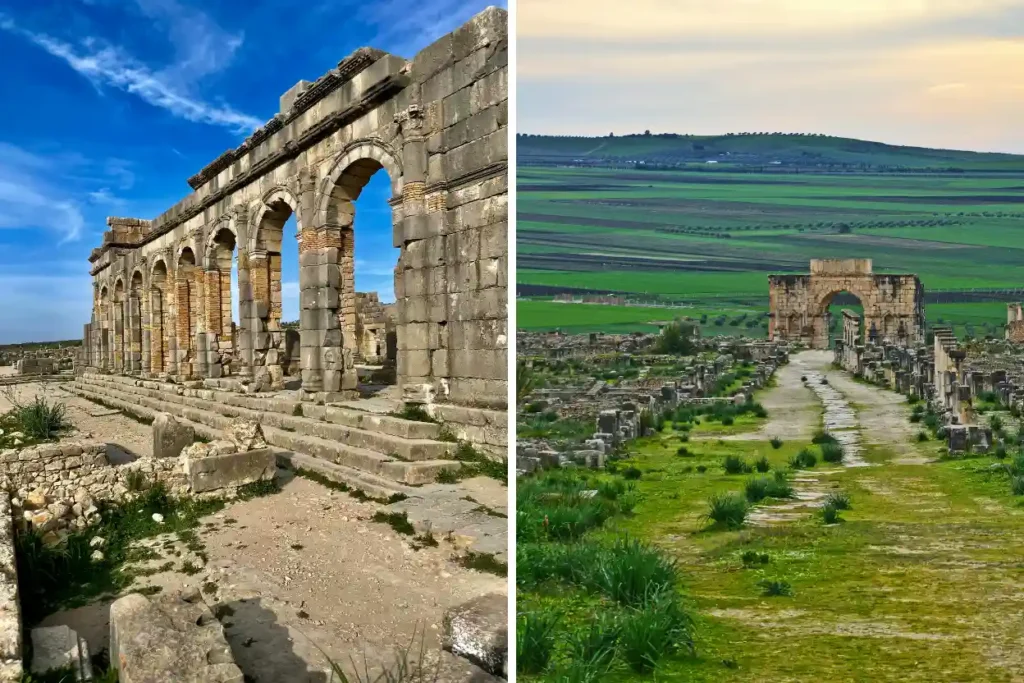
An hour’s drive from Fes, the Roman ruins of Volubilis rise from wheat fields like a fever dream. These are among the best-preserved Roman remains in North Africa—mosaics still intact, triumphal arches standing, the ghost of an ancient city visible in its bones.
Visit at sunrise before tour buses arrive. The site opens at 8 AM, and morning light makes the mosaics glow. Allow at least two hours to explore properly—the House of Orpheus and the Basilica are highlights, but wandering the residential streets gives a sense of how ordinary Romans lived at the empire’s edge.
Combine Volubilis with the nearby holy town of Moulay Idriss, where the founder of Morocco’s first Islamic dynasty rests in a shrine non-Muslims cannot enter but can observe from outside. The town itself cascades down a hillside in a tumble of white buildings, offering panoramic views from the main square. Lunch at Restaurant Scorpion—the terrace overlooks the shrine, and the tagines are genuinely excellent.
Practical Wisdom for Your Fes Adventure
Fes rewards slow travel. Three days minimum lets you scratch the surface; a week allows genuine exploration. Stay inside the medina—riads like Riad Laaroussa and Dar Seffarine offer authentic experiences without sacrificing comfort—and embrace the disorientation. That moment when you finally navigate from your riad to the tanneries without asking for directions? Pure triumph.
The best months to visit are March through May and September through November. Summer brings brutal heat, and the medina’s narrow alleys trap it. Winter is mild but can be rainy.
Most importantly, come with patience and genuine curiosity. Fes doesn’t perform for visitors the way Marrakech does. It simply is what it’s been for a thousand years: complicated, overwhelming, and absolutely irreplaceable. The unique things to do in Fes aren’t attractions you check off a list—they’re encounters that change how you see Morocco, and maybe travel itself.
Trust me: when you finally sit on a rooftop terrace at sunset, call to prayer echoing from a dozen minarets, sipping mint tea you’ve learned to pour properly, you’ll understand why some of us keep coming back.